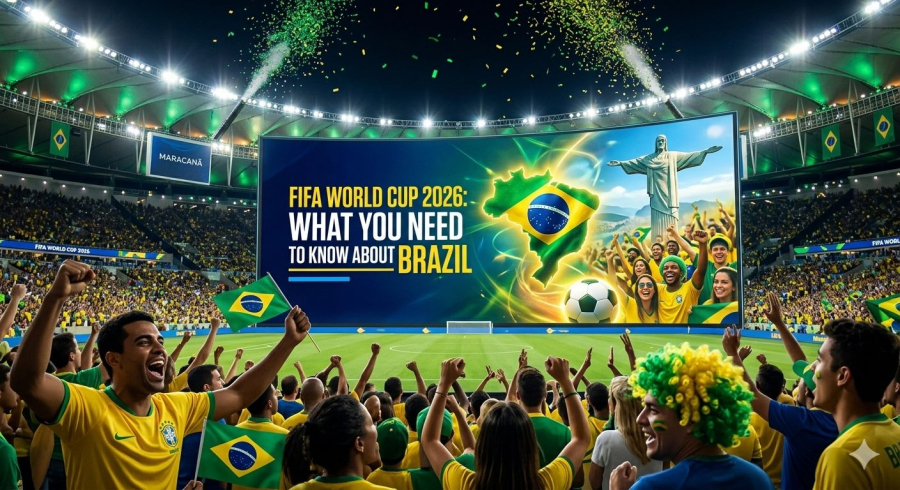
When the FIFA World Cup 2026 kicks off across the United States, Canada, and Mexico, few teams will arrive with as much global attention as Brazil. The Seleção is more than a contender: it is a football identity built on creativity, attacking flair, and a track record that has shaped the sport’s biggest stage for decades.
This guide covers the key facts, storylines, and practical context you need to follow Brazil’s journey toward (and potentially through) the 2026 tournament, with an upbeat, benefit-driven look at why Brazil tends to be one of the most rewarding teams to watch.
Brazil in one glance
- Confederation: CONMEBOL (South America)
- Nickname: Seleção
- World Cup titles: 5 (record)
- 2026 host countries: United States, Canada, Mexico
- 2026 format: 48 teams (expanded tournament)
The combination of Brazil’s historical pedigree and the World Cup’s expanded format makes the build-up especially compelling: more matches, more tactical variety, and more opportunities for elite teams to create memorable runs.
Why Brazil is always a headline act at the World Cup
Brazil is the only nation to have won the men’s World Cup five times (1958, 1962, 1970, 1994, 2002). That legacy matters because it influences everything around the team: expectations, media focus, opponent game plans, and the tournament’s overall narrative.
From a fan perspective, following Brazil is often a high-value World Cup experience because you get:
- Star density: Brazil routinely fields players from top European and Brazilian clubs.
- High entertainment potential: even in more pragmatic eras, Brazil’s talent pool supports dynamic attacking moments.
- Meaningful matchups: opponents frequently treat Brazil as a measuring stick, which raises intensity and stakes.
- Iconic tournament energy: Brazil’s supporter culture brings color, rhythm, and atmosphere that travels well.
World Cup 2026 basics: what changes, and why it matters for Brazil
The 2026 World Cup expands to 48 teams, which increases the number of matches and broadens the field. For traditional powers like Brazil, the benefits are clear: more time for a squad to build rhythm and more opportunities for standout individuals to shape the tournament.
That said, expanded tournaments can also reward depth and adaptability. Brazil’s biggest advantage is often the ability to rotate without a steep drop in quality, especially in attacking positions and across the midfield.
How Brazil qualifies for the 2026 World Cup
Brazil qualifies through CONMEBOL World Cup qualifying, one of the most competitive and demanding routes in international football. South American qualifying is typically played as a long league campaign where teams face each other home and away.
What makes CONMEBOL qualifying such a strong preparation pathway is the variety of challenges:
- Different playing styles: from high pressing to deep defensive blocks and fast transitions.
- Hostile away environments: intense atmospheres that test composure.
- Travel and rhythm demands: long distances and quick turnarounds.
For fans, this is good news: Brazil arrives at the World Cup battle-tested, with players accustomed to pressure and high-stakes matches.
Brazil’s World Cup legacy (and why it still shapes 2026)
Brazil’s history is not just a list of trophies; it is a style story. The team’s best World Cup sides are remembered for combining technique with tactical intelligence. That tradition helps explain why Brazil’s matches are often viewed as “must-watch” fixtures even by neutral fans.
| World Cup | Result | What it means today |
|---|---|---|
| 1958 | Champions | Marked Brazil’s first global breakthrough and identity as an attacking force. |
| 1962 | Champions | Confirmed Brazil’s ability to sustain excellence across tournaments. |
| 1970 | Champions | Often cited among the most iconic World Cup teams in history. |
| 1994 | Champions | Showed Brazil can win with control and defensive discipline, not only flair. |
| 2002 | Champions | Reinforced Brazil’s talent pipeline and tournament mindset in the modern era. |
Heading into 2026, the practical takeaway is simple: Brazil is accustomed to the pressure of being expected to contend. That expectation can be heavy, but it also tends to sharpen focus and raise performance levels in big moments.*
What Brazil tends to look like on the pitch
Brazilian football is famous for technical skill and expressive attacking play, but modern Brazil is also defined by structure. In recent cycles, Brazil has often balanced wide attacking threats with a midfield built to control tempo and protect transitions.
Core strengths fans can look for
- 1v1 quality in attack: wingers and forwards who can create chances without needing perfect build-up.
- Fullback involvement: wide defenders often support attacks and help maintain pressure.
- Set-piece potential: athletic center-backs and strong delivery can swing tight matches.
- Goalkeeping depth: Brazil has produced multiple top-level keepers in recent years.
Why this style works well in tournament football
World Cups are short, intense, and decided by moments. Teams that can create a goal from an individual action, a quick combination, or a set piece often go deep. Brazil’s player pool is usually built for that reality, which is a major reason the Seleção remains a consistent threat regardless of the draw.
Brazil’s 2026 storylines to follow
Brazil and the World Cup is never just one narrative. Here are the storylines that typically define Brazil’s build-up to a tournament like 2026, without relying on speculation or premature squad predictions.
1) The blend of experience and new energy
Brazil frequently enters tournaments with a mix of established internationals and rising stars. This blend matters because the World Cup often rewards teams that have both:
- Composure under pressure (usually from veterans)
- Unpredictability and speed (often from emerging attackers)
For viewers, this can make Brazil matches especially engaging: you get leadership and game management alongside moments of youthful acceleration and creativity.
2) Leadership and coaching direction
National team coaching can change within a World Cup cycle. In the mid-2020s, Brazil has been led by Dorival Júnior as head coach, though national team appointments can evolve before a major tournament.
Regardless of who is in charge in 2026, Brazil’s success tends to hinge on a few consistent coaching priorities:
- Defensive balance to avoid being punished in transition
- Clear roles for star attackers so the team functions as a unit
- Midfield control to manage high-pressure knockout games
3) Tournament mentality
Brazil’s biggest advantage may be its cultural familiarity with the World Cup spotlight. This is not just hype: it influences preparation, media handling, and match psychology. Over seven games, calm decision-making can be the difference between a deep run and an early exit, and Brazil’s environment is built around that reality.
Players to know (without overpromising a final 2026 roster)
World Cup squads are finalized close to the tournament, and form, fitness, and tactical needs always matter. Still, Brazil’s talent pipeline is one of the sport’s most reliable, and several names have defined the current era or represent the next wave.
Attacking talent
- Vinícius Júnior: a high-impact winger known for pace, dribbling, and chance creation.
- Rodrygo: versatile forward play, smart movement, and a knack for decisive moments.
- Endrick: part of the new generation of Brazilian forwards, widely discussed for his potential as he develops at top level.
- Neymar: one of Brazil’s most influential modern players; availability depends on form and fitness closer to 2026.
Midfield and control
- Bruno Guimarães: known for ball progression, intensity, and two-way contribution.
- Casemiro: an experienced defensive midfielder profile; role depends on tactical approach and the evolution of the squad.
Defense and goalkeeping
- Marquinhos: leadership and high-level experience at center-back.
- Alisson: elite goalkeeping with strong command and shot-stopping.
- Ederson: top-level distribution and composure, particularly valuable against high pressing.
The biggest benefit for Brazil supporters is simple: even when individual names shift, the overall level of quality tends to remain extremely high. Brazil’s depth makes it more resilient to the uncertainties that can derail other teams.
What makes Brazil a great team to follow in 2026 (even as a neutral)
If you are planning your World Cup viewing schedule, Brazil is often one of the best “default choices” because the matches frequently deliver on both entertainment and competitive tension.
Reasons Brazil games stand out
- Creative attacking sequences: quick combinations, dribbles, and wide overloads.
- Big-match intensity: opponents often raise their level against Brazil.
- Moments of individual brilliance: the kind of highlights people remember years later.
- Knockout drama potential: Brazil is regularly in the conversation for the later rounds.
How to think about Brazil’s chances in a factual way
It is tempting to treat Brazil as an automatic finalist, but the World Cup is a tight-margin tournament. A more grounded way to assess Brazil is to focus on indicators that usually correlate with deep runs:
- Squad balance: not just attackers, but midfield stability and defensive chemistry.
- Fitness timing: having key players healthy matters enormously.
- Efficiency in front of goal: converting chances often decides knockout ties.
- Game management: protecting leads, handling momentum swings, and succeeding in set pieces.
Brazil’s advantage is that it typically enters a World Cup with the pieces needed to score well on all four indicators.
Quick Brazil FAQs for the 2026 World Cup
Has Brazil ever hosted a World Cup?
Yes. Brazil hosted the men’s FIFA World Cup in 1950 and 2014.
How many World Cups has Brazil won?
Brazil has won the men’s World Cup five times, the most of any nation.
What is Brazil’s biggest strength at World Cups?
Historically, Brazil’s biggest strengths are technical quality, attacking talent, and a deep player pool that supports strong tournament performance.
Will Brazil be fun to watch in 2026?
Brazil is widely considered one of the most watchable teams in international football thanks to its attacking traditions and the caliber of its players. While every match depends on tactics and opposition, Brazil games are often high-interest fixtures.
Bottom line
Brazil at the FIFA World Cup 2026 is a blend of tradition and opportunity: a record-setting champion with the kind of talent pipeline that keeps expectations high in every cycle. With the tournament arriving in North America and expanded to 48 teams, the stage is set for Brazil to bring its signature energy to a global audience once again.
If you want one takeaway, make it this: following Brazil is rarely just about results. It is about the experience of elite tournament football where the next unforgettable moment always feels one attack away.
