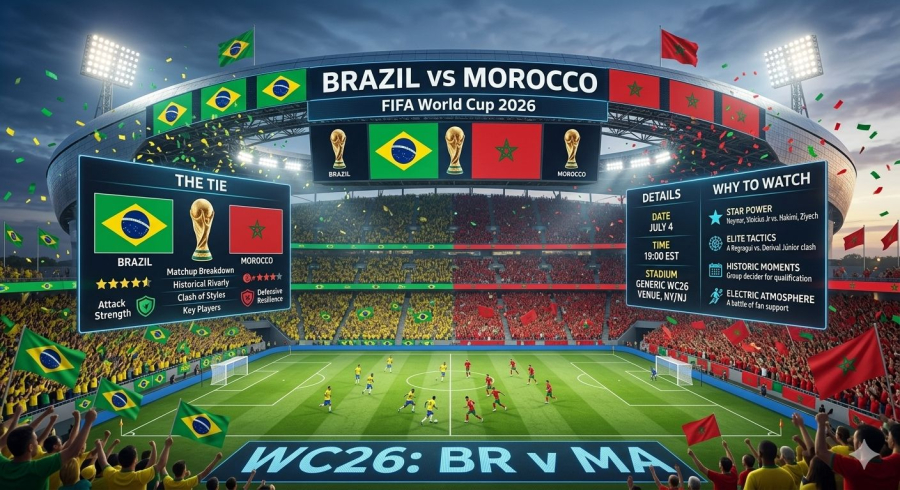
Brazil vs Morocco has all the ingredients of a World Cup classic: elite talent, contrasting styles, and the kind of tactical chess match that rewards every minute of attention. If you’re looking for a fixture that can deliver big moments and bigger storylines, this is one to circle.
There’s one important caveat, though: as of June 7, 2026, a specific Brazil vs Morocco match at the 2026 FIFA World Cup (WC26) may or may not be officially scheduled, depending on the tournament stage, group draw, and qualification outcomes. That means details like the exact date and stadium can be to be determined until FIFA publishes the finalized match calendar tied to the draw.
Still, you can absolutely get ahead of the curve. Below is a clear breakdown of what’s typically known, what’s not knowable until official release, and why this potential tie is worth your attention.
Brazil vs Morocco at WC26: tie, date, and stadium (what’s confirmed vs what’s pending)
At a World Cup, a “tie” can mean two things: the fixture (Brazil vs Morocco being paired to play) and the result (a draw after 90 minutes). Before kickoff, what fans usually want is the fixture details: when and where the match happens, and what’s at stake.
| Detail | Status (WC26) | What it means for you |
|---|---|---|
| Match tie (Brazil vs Morocco) | TBD until official draw and scheduling | The teams can only be definitively “tied” to play once the bracket or group schedule places them together. |
| Date | TBD until FIFA match calendar is published | The exact kickoff date depends on whether it’s a group match, Round of 32, Round of 16, quarterfinal, semifinal, or final. |
| Stadium (host venue) | TBD until assigned by official schedule | WC26 is hosted across multiple cities and stadiums; venue assignment is announced with the match schedule. |
| What’s at stake | Depends on tournament stage | Group points, knockout survival, or a path to the trophy can completely change the match intensity. |
If you’re planning travel, watch parties, or content calendars, the best approach is to treat Brazil vs Morocco as a high-upside potential fixture and be ready to act once the official schedule locks in.
How World Cup 2026 scheduling determines the Brazil vs Morocco date and stadium
The 2026 World Cup is staged across multiple host venues, with match dates and stadium assignments linked to the official competition schedule. A Brazil vs Morocco meeting could happen in different contexts, and each context affects timing, location, and pressure.
1) Group stage meeting
If Brazil and Morocco are drawn into the same group, the date and stadium would be one of the group match slots assigned to that group. In group play, every point matters, but teams also manage energy across multiple matches.
- Why it’s compelling: tactical discipline vs attacking flair, with a strong chance of momentum swings.
- Fan benefit: group matches often feel like a festival, with packed schedules and multiple big games close together.
2) Knockout stage meeting
If they meet after the group stage, the match becomes a single-elimination event (with extra time and penalties if needed, depending on tournament rules for that round). This is where legacies are made.
- Why it’s compelling: the margin for error shrinks to almost nothing.
- Fan benefit: knockout matches are peak drama, especially if the game stays close into the final minutes.
3) Why stadium assignment matters
Venue choice can shape the match experience in subtle ways: atmosphere, travel demands for fans, and even recovery logistics for teams. WC26’s multi-city format means the venue can strongly influence how supporters plan their week.
Why you should watch Brazil vs Morocco: the matchup benefits for every kind of fan
Some matches are “must-watch” because they have star power. Others earn it because the tactical battle is so rich it rewards replays. Brazil vs Morocco has a real chance to be both.
Brazil: a standard-bearer for World Cup spectacle
Brazil’s World Cup identity is synonymous with creativity, technical quality, and attacking ambition. When Brazil are flowing, the game opens up and chances arrive in clusters. That’s not just entertaining, it’s instructive: you see how elite teams manipulate space, tempo, and confidence.
- What you get as a viewer: combination play, individual brilliance, and a constant threat of a highlight-reel moment.
- Why it matters at WC26: tournament football often punishes slow starts, and Brazil typically bring urgency and intent.
Morocco: modern, organized, and fearless
Morocco have built a reputation for being hard to break down, smart in transition, and mentally strong in high-pressure situations. That blend can make them the ideal opponent for a heavyweight: they can absorb pressure, then strike with purpose.
- What you get as a viewer: structured defending, quick counters, and the satisfaction of watching a game plan executed with discipline.
- Why it matters at WC26: Morocco’s style can turn a “favorite vs underdog” narrative into a genuine 50-50 contest.
A clash of styles that creates real drama
World Cup magic often comes from contrasts. Brazil are often associated with expressive attacking patterns; Morocco are often associated with compact structure and rapid transitions. When those philosophies collide, you get:
- High tactical tension: can Brazil pull Morocco’s shape apart, or will Morocco force Brazil into low-percentage shots?
- Momentum swings: one interception or one creative pass can flip the match.
- Signature moments: set pieces, counters, and late-game adjustments can become decisive.
The “tie” angle: what a draw could mean in Brazil vs Morocco
If by “tie” you mean the result (a draw after 90 minutes), that outcome can still be a win for viewers and, depending on the stage, a strategic win for one or both teams.
If it’s a group match
A draw can be a smart result that keeps qualification paths open. It can also intensify the group storyline, making the next matches more urgent and watchable.
- Fan benefit: a draw often makes the group table tighter, raising the stakes in the following games.
- Storyline boost: media narratives shift quickly when a heavyweight is held, or when a disciplined side proves it can go toe-to-toe.
If it’s a knockout match
In knockouts, a draw after regulation typically leads to extra time and possibly penalties (depending on the round’s rules). That is the definition of edge-of-your-seat viewing.
- Fan benefit: extra time adds intensity; penalties add unforgettable high-pressure moments.
- Why it’s memorable: these are the matches people reference for years because every touch carries weight.
Key storylines to follow before kickoff
Even before the official date and stadium are confirmed, you can track the signals that will make this matchup even more compelling.
1) Tournament context and group dynamics
Who else is in the group (or which side of the bracket they land on) can change how aggressive or conservative each team approaches the match.
2) Form, fitness, and squad balance
World Cups are about more than starting elevens. Depth, recovery, and adaptability often decide who peaks at the right time.
3) Tactical adjustments and coaching decisions
Matches like Brazil vs Morocco are often decided by small adjustments: pressing triggers, fullback positioning, midfield spacing, and how quickly teams switch play.
How to plan your viewing experience (even before the schedule is official)
You don’t need a confirmed stadium and date to get ready. You can set yourself up for a great experience now and then finalize details once the official match listing is released.
For casual fans
- Pick the storyline: flair vs structure is an easy lens to follow.
- Watch with friends: this is the kind of matchup where reactions are half the fun.
For serious fans
- Focus on transitions: note what happens immediately after possession changes.
- Track set pieces: corner and free-kick routines can decide tight tournament matches.
- Observe substitutions: timing and roles often reveal the true match plan.
For travelers and planners
- Stay flexible: plan windows rather than a single fixed day until the official schedule is confirmed.
- Prepare for quick decisions: high-demand fixtures can move fast once dates and venues are announced.
Quick recap: why Brazil vs Morocco could be one of WC26’s best watches
- Elite vs elite: Brazil’s global pedigree meets Morocco’s modern competitive edge.
- Style contrast: creative attack vs organized resistance creates natural suspense.
- High stakes potential: whether it’s group points or knockout survival, the pressure elevates performance.
- Memorable moments: a single pass, tackle, set piece, or penalty can define the narrative.
Once the official WC26 draw and match schedule confirm the date and stadium for Brazil vs Morocco (if the fixture occurs), you’ll be ready to act fast and enjoy it fully. Until then, it’s a matchup worth anticipating because it promises exactly what the World Cup does best: high-level football, national pride, and moments that feel bigger than the clock.
